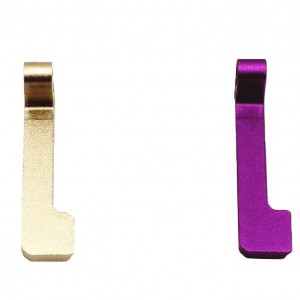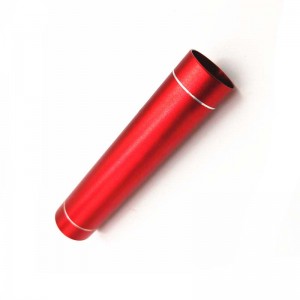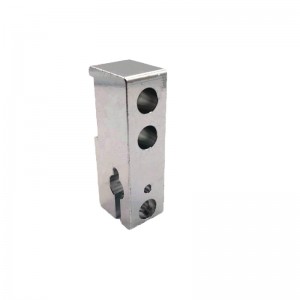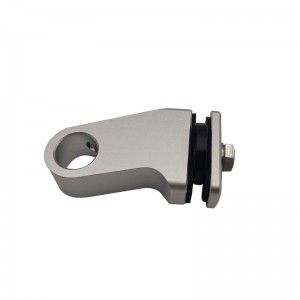
Anebon customized aluminum part 3d Milling


What is customized aluminum part 3d Milling
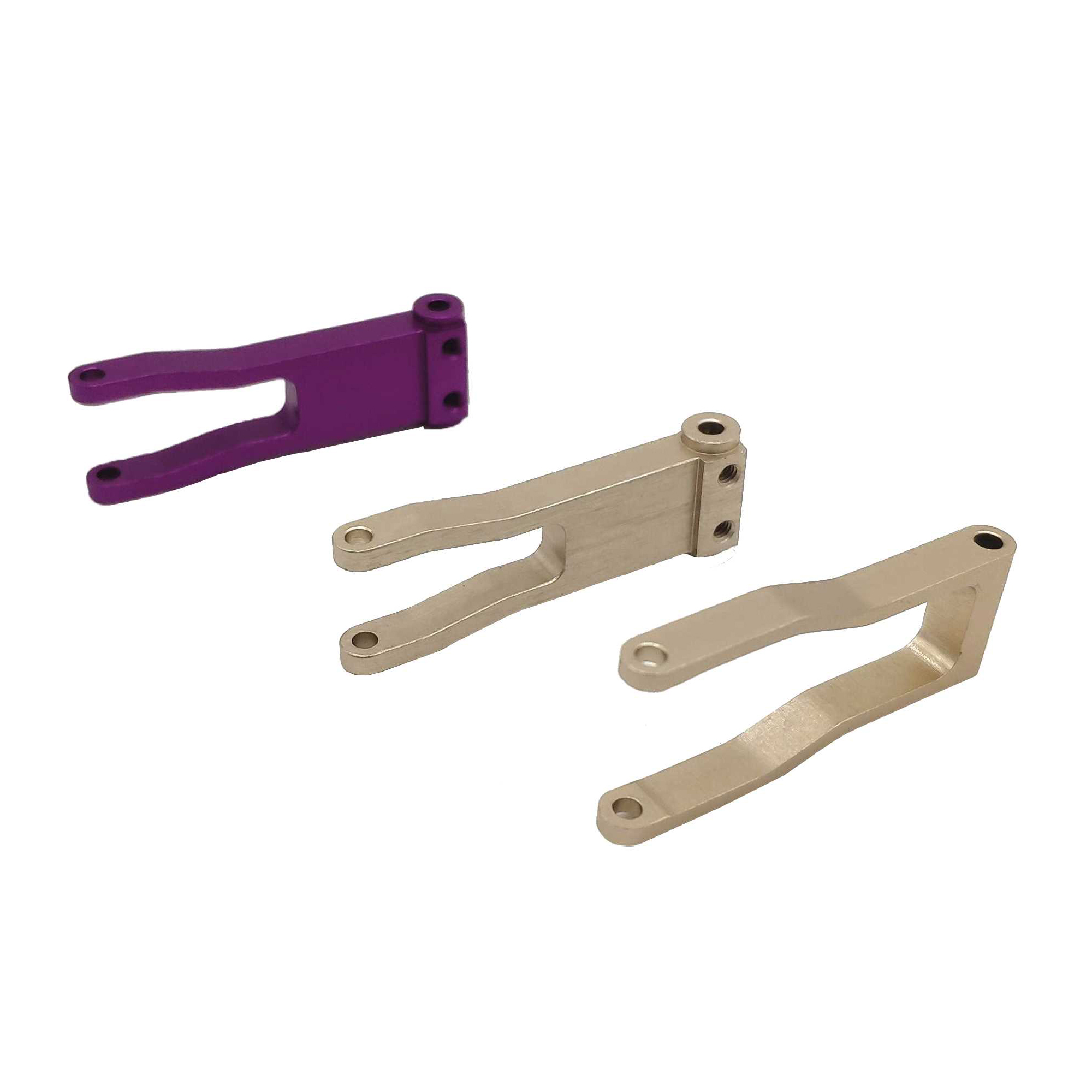
Customized aluminum part 3D milling is a precision manufacturing process that uses CNC machines to carve complex aluminum components based on specific client designs. This method ensures high accuracy, smooth finishes, and durability, meeting diverse industrial needs such as automotive, aerospace, and electronics. It allows for rapid prototyping and small or large batch production, optimizing both cost and performance.

The advantage of CNC Milling Process:
(1) High processing precision and stable and reliable processing quality. The pulse equivalent of numerical control equipment is usually 0. 001mm, and the high-precision numerical control system can reach 0.1μm. In addition, CNC machining also avoids operator's operation errors;
(2) High degree of automation in production, CNC milling can reduce the labor intensity of operators. This will facilitate the automation of production management;
(3) The parts are highly adaptable and flexible, and can process parts that are extremely disorderly or difficult to manipulate, such as mold parts, shell parts, etc.
Advanced CNC Milling Capabilities
At Anebon, our state-of-the-art facility is equipped with advanced 3-axis, 4-axis, and 5-axis CNC milling machines imported from Japan, enabling us to handle complex geometries and tight tolerances. We achieve precision up to ±0.002mm, making our customized aluminum parts ideal for high-demand applications. Our capabilities extend to milling, turning, EDM, wire cutting, and surface grinding, allowing us to produce intricate components with exceptional accuracy. Whether you require prototypes or high-volume production, our flexible manufacturing processes ensure timely delivery without compromising quality.


Applications
Anebon’s customized aluminum parts serve a wide range of industries, including aerospace, automotive, electronics, medical equipment, and intelligent automation. Our 3D-milled aluminum components are used in precision brackets, housings, fittings, and auto parts, as well as lighting decorations and furniture hardware. Their lightweight, durable, and corrosion-resistant properties make them perfect for applications requiring high strength-to-weight ratios and aesthetic appeal, such as chassis shells and electrical appliance components.

Materials and Composition Analysis
We use premium aluminum alloys, such as 6061, 7075, and 6082, to ensure optimal performance. Aluminum 6061 offers excellent machinability, corrosion resistance, and weldability, making it ideal for general-purpose applications. Aluminum 7075, known for its high strength and hardness, is preferred in aerospace and high-stress environments. Aluminum 6082 provides slightly higher tensile strength than 6061, suitable for structural components. Below is a composition table for these alloys:
|
Material |
Aluminum (%) |
Magnesium (%) |
Silicon (%) |
Iron (%) |
Copper (%) |
Zinc (%) |
Titanium (%) |
|---|---|---|---|---|---|---|---|
|
Aluminum 6061 |
95.8-98.6 |
0.8-1.2 |
0.4-0.8 |
≤0.7 |
0.15-0.4 |
≤0.25 |
≤0.15 |
|
Aluminum 7075 |
87.1-91.4 |
2.1-2.9 |
≤0.4 |
≤0.5 |
1.2-2.0 |
5.1-6.1 |
≤0.2 |
|
Aluminum 6082 |
95.2-98.3 |
0.6-1.2 |
0.7-1.3 |
≤0.5 |
≤0.1 |
≤0.2 |
≤0.1 |
These materials are sourced from trusted suppliers, ensuring consistency and compliance with international standards.
Surface Treatment
To enhance durability and aesthetics, we offer a variety of surface treatments for our aluminum parts, including:
-
Anodizing: Improves corrosion resistance and surface hardness, available in multiple colors.
-
Powder Coating: Provides a durable, protective finish for enhanced wear resistance.
-
Electroplating: Adds nickel or chrome for improved conductivity and wear resistance.
-
Polishing: Achieves mirror-like finishes for aesthetic and functional purposes.
-
Sandblasting: Creates uniform matte finishes for better adhesion.
-
Passivation: Enhances corrosion resistance for components exposed to harsh environments.
These treatments ensure that our parts meet both functional and visual requirements.


Our team of skilled engineers and technicians brings extensive experience in CNC machining, enabling us to tackle complex projects with precision and efficiency. We collaborate closely with clients to understand their needs, offering tailored solutions from design to production. Our commitment to innovation drives us to adopt the latest technologies and optimize processes, ensuring cost-effective and high-quality outcomes. With a customer-centric approach, we provide responsive support and expert guidance throughout the project lifecycle.

Quality Assurance
Quality is at the core of Anebon’s operations. As an ISO9001-certified manufacturer, we adhere to stringent quality control protocols. Our quality assurance process includes:
-
In-process Inspections: Using CMM and precision gauges to monitor production.
-
Surface and Dimensional Checks: Ensuring compliance with client specifications.
-
Final Testing: Verifying mechanical properties and surface finish.
We provide detailed inspection reports and certificates of conformance, ensuring full traceability from raw material to finished product. Our zero-defect policy guarantees that every part meets the highest standards.


Packaging and Logistics
Anebon prioritizes safe and efficient delivery of our CNC-milled parts. We use custom packaging solutions, including foam inserts, vacuum-sealed bags, and sturdy cartons, to prevent damage during transit. For sensitive components, we offer anti-static or corrosion-resistant packaging. Our logistics team partners with reliable global carriers, providing flexible shipping options such as air, sea, or express delivery to meet your deadlines. We ensure that your parts arrive on time and in perfect condition.

FAQ
Q1: What industries use customized aluminum part 3D milling?
A1: It’s widely used in automotive, aerospace, electronics, robotics, and medical device manufacturing.
Q2: How precise is 3D milling for aluminum parts?
A2: CNC 3D milling achieves high precision, typically within microns, ensuring parts fit exact specifications.
Q3: Can customized aluminum parts be produced in small quantities?
A3: Yes, 3D milling is ideal for both prototyping and low to medium volume production runs.
Q4: What design file formats are accepted for customized milling?
A4: Common formats include STEP, IGES, STL, and DWG for accurate machining.
Q5: How long does it take to produce a customized aluminum part?
A5: Production time varies by complexity, generally ranging from a few days to a couple of weeks.
Other Product Display
In addition to our customized aluminum parts, Anebon offers a comprehensive range of CNC machining services, including:
-
CNC Turning Parts: Precision components with cylindrical features, ideal for automotive and aerospace applications.
-
Die Casting Parts: High-volume production of small to medium-sized parts with complex geometries.
-
Metal Stamping Parts: Durable components for electronics, appliances, and furniture.
-
Plastic CNC Machining: High-precision plastic parts for medical and consumer products.
Our advanced equipment and expertise allow us to work with materials like stainless steel, brass, copper, and titanium, delivering tailored solutions for diverse industries.